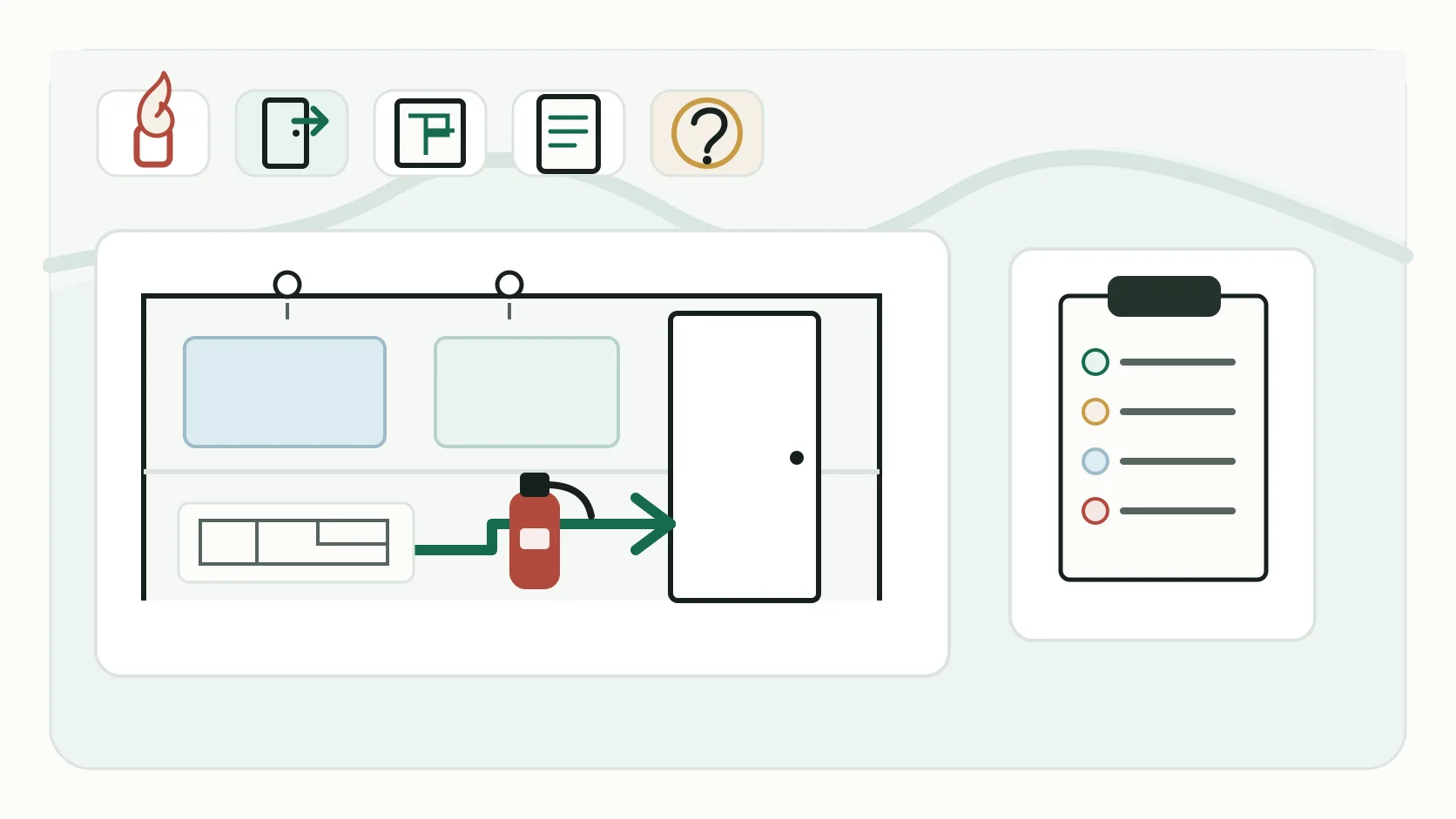
For businesses that enter the City’s licensing process, fire compliance can be part of the premises-level evidence needed before opening. Official source
The City lists a population and clearance certificate from the fire prevention officer among the documentation required for fixed commercial sites and businesses in the business-licence route. That makes fire a pre-commitment premises question where it applies — not simply an operational task to leave until the end of the fit-out.
Why fire belongs in the premises decision
A commercial space may look suitable while still leaving unresolved questions about occupancy, escape routes, fire equipment, approved fire-protection measures, alterations or the way the intended operation changes the use of the space.
For a restaurant or other higher-complexity operation, those questions can interact with fit-out and approved-plan decisions.
What the City’s fire process tells you
The City’s Fire and Rescue Service provides building inspections and fire-safety support, and the City’s business-licence guidance connects fire documentation with the licence process.
The City’s fire guidance also notes responsibilities around keeping relevant fire-protection measures current before inspection.
That does not mean a website can predict the outcome of an inspection.
What should be checked before money moves?
Where fire compliance is relevant, establish:
- whether the intended operation enters a business-licence or inspection route;
- what the approved premises / fire-plan position is;
- whether the proposed fit-out changes relevant fire measures;
- whether occupancy, seating, extraction, equipment or layout create additional facts that need assessment;
- what still requires authority or professional confirmation.
What this page does not prove
A generic article cannot certify fire compliance, calculate occupancy, approve escape arrangements or confirm that a specific premises will pass an inspection.
If a lease or fit-out depends on a fire-related assumption, keep that fact unresolved until the appropriate evidence is obtained.
Check fire assumptions before commitment
Keep fire, occupancy, layout and approved-plan questions visible while you can still act on them.